

Featured News






Health

Business Together To Make Investments
I am alone, and feel the charm of existence in this spot, which was created for the bliss of souls like mine.
Read More

Economy
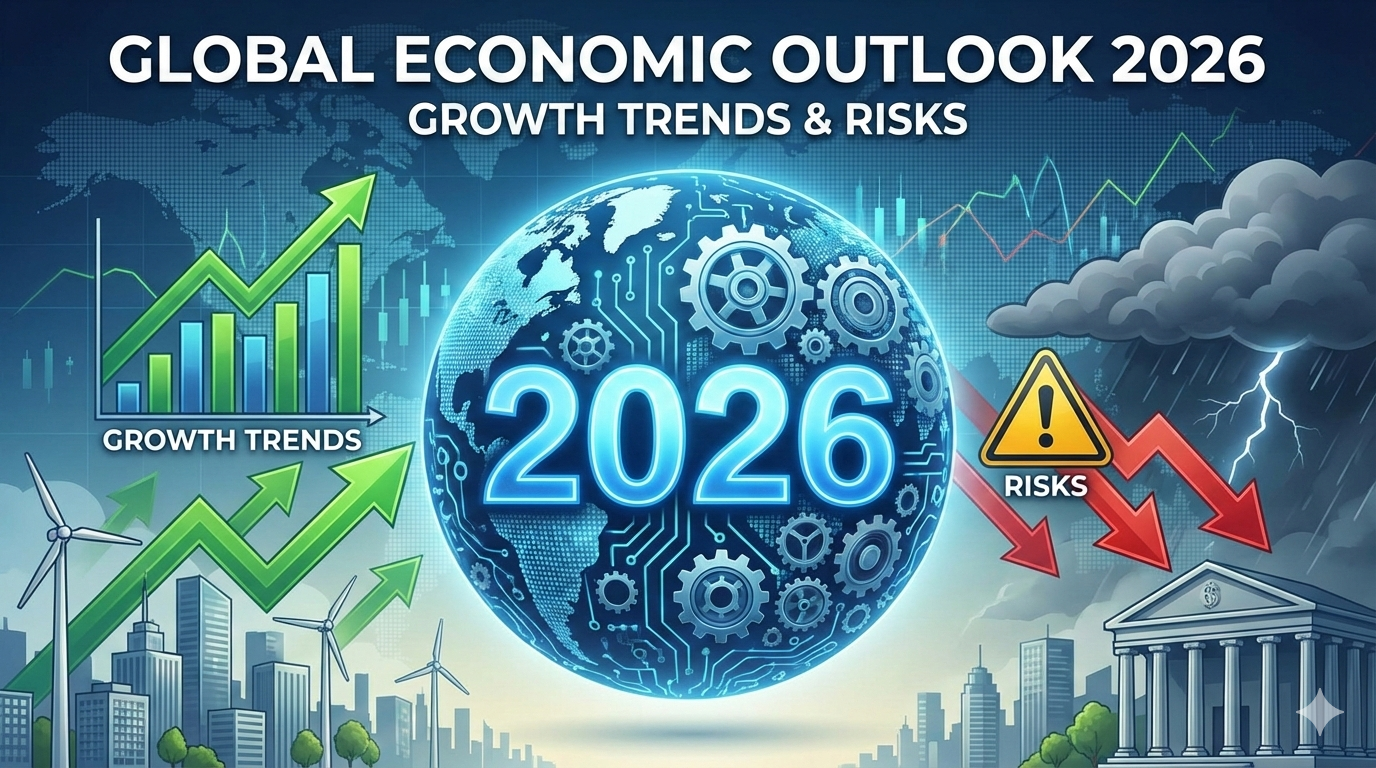
Global Economic Outlook 2026: Growth Trends & Risks
The global economy in 2026 stands at a critical crossroads. After years of post-pandemic recovery, tightening monetary policies, and geopolitical uncertainties, nations are recalibrating growth strategies while investors closely monitor emerging risks. Understanding the global economic outlook for 2026 is essential for policymakers, businesses, and investors aiming to make informed decisions in an increasingly interconnected world.
This article explores the key growth trends, regional performance expectations, and major economic risks shaping the global economy in 2026.
Global Growth Trends in 2026
1. Moderating but Stable Global Growth
Economic growth in 2026 is expected to stabilize rather than surge. Advanced economies are likely to see moderate expansion as inflation cools and interest rates gradually normalize. Emerging markets, particularly in Asia, are projected to outperform due to stronger domestic demand and infrastructure investment.
2. Shift Toward Consumption-Led Growth
With supply chains normalizing, global growth is increasingly driven by consumer spending rather than emergency fiscal stimulus. Rising middle-class populations in developing economies are playing a crucial role in sustaining demand.
3. Technology-Driven Productivity
Artificial intelligence, automation, and digital transformation are contributing to productivity gains across manufacturing, finance, and services. Countries investing in digital infrastructure are better positioned to achieve long-term economic resilience.
Regional Economic Outlook
United States & Europe
- Slower but steady GDP growth
- Gradual easing of inflationary pressures
- Focus on labor market stability and innovation
Asia-Pacific
- Strong growth momentum led by India and Southeast Asia
- Manufacturing diversification benefiting export-oriented economies
- Increased foreign direct investment
Emerging & Developing Economies
- Growth supported by infrastructure spending
- Vulnerability to external debt and currency fluctuations
- Dependence on global trade recovery
Key Risks Facing the Global Economy
1. Geopolitical Tensions
Ongoing geopolitical conflicts and trade disputes continue to disrupt supply chains and energy markets, increasing uncertainty for global investors.
2. High Debt Levels
Public and private debt remain elevated across many economies. Rising borrowing costs could strain fiscal budgets and slow economic expansion.
3. Climate & Environmental Risks
Extreme weather events and climate-related disruptions are becoming economic risks, affecting agriculture, energy supply, and insurance sectors.
4. Financial Market Volatility
Shifts in interest rate policies, currency fluctuations, and capital flows may lead to periods of heightened market volatility in 2026.
What This Means for Investors & Businesses
- Diversification remains key to managing risk
- Emerging markets offer growth opportunities but require cautious evaluation
- Technology and sustainability-focused sectors are expected to outperform
- Long-term planning should factor in macroeconomic and geopolitical uncertainties
Conclusion
The global economic outlook for 2026 reflects a world transitioning from recovery to recalibration. While growth opportunities exist, they are accompanied by structural challenges and evolving risks. Staying informed, adaptable, and strategically diversified will be essential for navigating the economic landscape ahead.